
How to Decide What to Eat When You Can't Choose
The delivery window is too long and nobody wants to cook. Start with the meals you can manage tonight, then use a shortlist to settle the choice.
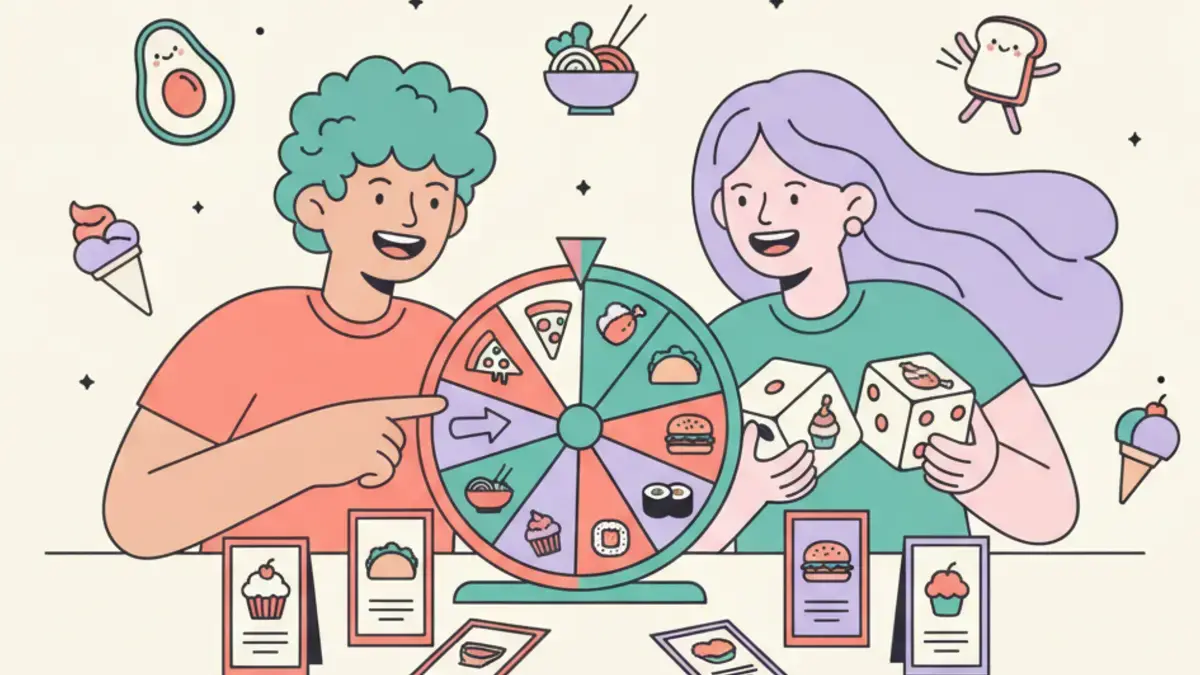
Here's how to decide what to eat when you can't choose: stop asking what you're in the mood for and ask what's actually possible. What food exists, how much time you have, what you can spend, how much effort you can face. That usually leaves two or three real options, and a spinner or a coin picks between them in seconds.
I learned this after one too many 40-minute fridge standoffs that ended in cereal at 8:15. The five-step filter below is what finally ended the debate in our kitchen, and it takes under two minutes to use.
Featured tool
What Should I Eat?
Use the meal picker's filters to find an idea for tonight. Check the ingredients and timing before settling on its suggestion.
The five checks before you choose
1. See what's available
Open the fridge once. Check the freezer too; that half-bag of dumplings behind the ice tray is easy to forget.
Write down a few meals you could make from what you have. If you're buying dinner, include only places you can reach or order from tonight. Check dietary restrictions here, before anyone starts campaigning for a restaurant.
Two options will do. You don't owe the list eight.
2. Count backward from when you need to eat
A recipe marked "20 minutes" may assume the vegetables are already chopped. Read it. Add time for the water to boil and for whatever you need to thaw.
If dinner has to happen within half an hour, eggs on toast might fit. A delivery app's estimate of 25 to 45 minutes is a gamble with that deadline. Pickup may work if somebody can leave now.
3. Put a number on the budget
Agree on the amount you can spend before opening menus. Include delivery charges, and leave room for tax or a tip where applicable.
The food already at home may require no extra purchase tonight. That's worth checking before turning a tired evening into an expensive one.
4. Include the washing up
You might have the ingredients for a stir-fry and still dread chopping everything. Fair enough.
Choose a meal whose work you can manage. A sandwich needs some assembly; frozen dumplings still need cooking. If you barely want to stand at the counter, reheating a portion is a different proposition from making a whole pan of something.
5. Pick from the meals left
Look at the remaining names. Choose one you want, or use a coin for two acceptable options.
If you dislike the result, say what bothers you. "I forgot I had that for lunch" is useful information. Change the list rather than spinning until it happens to land on the answer you had in mind.
Four friends before a movie
Suppose Sam, Priya, Marcus, and you have 75 minutes before a screening. Everyone has agreed to spend at most $20 each, and Priya needs a vegetarian meal. These are example prices and timings; you'd check the actual menus.
The group starts with eight nearby choices. Two have long waits, so the steakhouse and Italian restaurant go. Sushi would take the bill past the agreed budget. The pho place has no vegetarian broth that evening.
That leaves four restaurants. Before adding the Thai place, check its sauces as well as the listed vegetables; a tofu dish can still contain fish sauce. Priya should be able to choose something she wants to eat. The same check applies to the burger place's veggie option.
Now everyone can accept burgers, Thai, pizza, or tacos. Write those four down and draw a name. Suppose Thai comes out. Someone calls to check there's a table while another person looks at the walk to the theater. If the timing has changed, move to another agreed option.
Notice that the $20 limit belongs to each person. Averaging an $80 bill doesn't help if one friend's meal costs $29.
A die, some cards, or your phone
A decision spinner is handy when nobody wants to own the choice. Enter each meal once. For a visible wheel on a shared screen, use the wheel spinner; the dedicated meal picker also has built-in suggestions.
You can spin between cuisines, though you'll still need to choose a restaurant afterward. I would skip a random budget wheel. Agreeing to spend $10 and then drawing "$25" creates another discussion.
Use one die
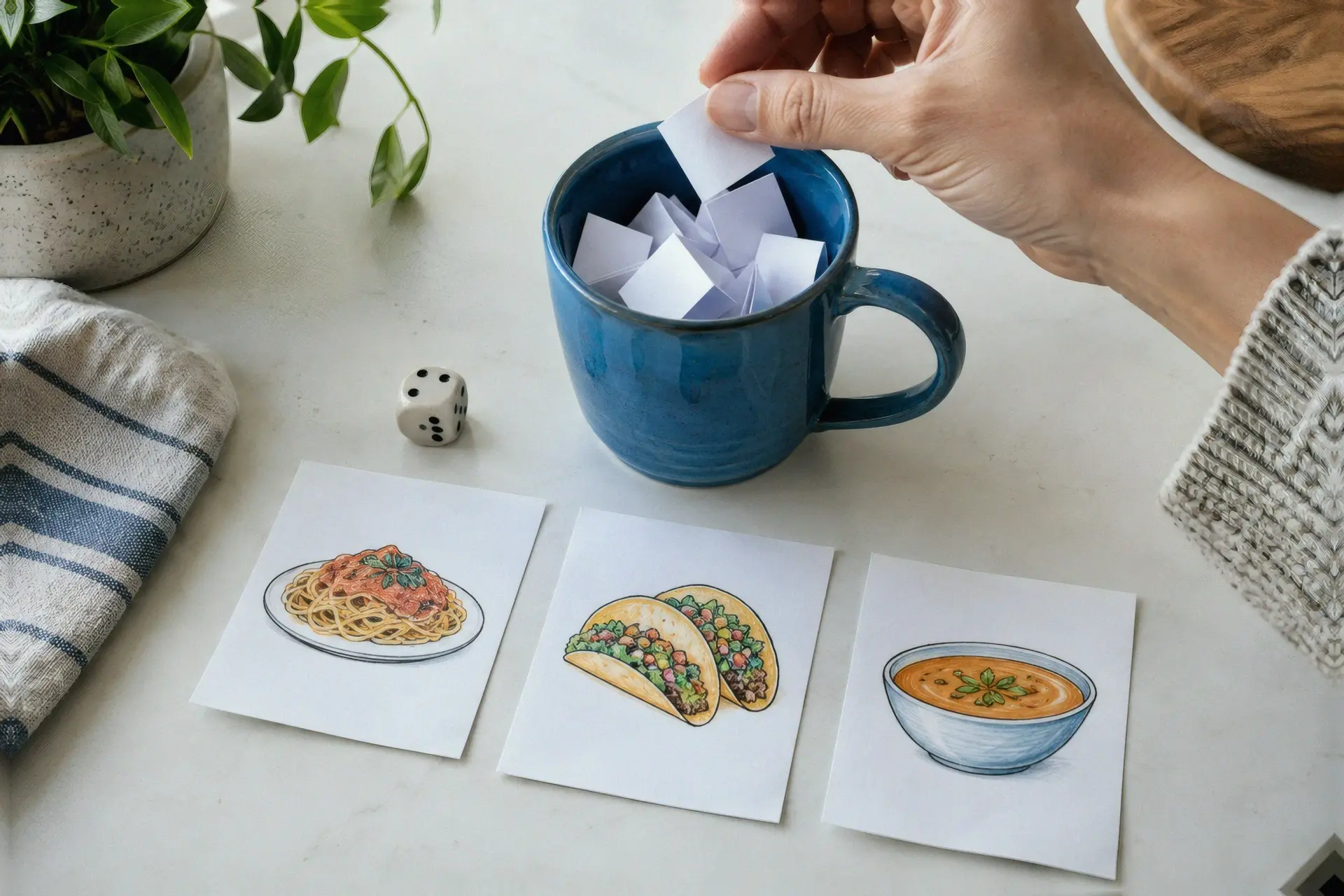
Number up to six meals and roll a fair six-sided die. With four meals, ignore a five or six and roll again. Keep doing that until a listed number appears.
Two dice need more care. A total of seven has six possible combinations, while a two only has one. If you label meals with those totals, they get unequal chances.
For a longer list, the dice roller has other die sizes. Eight meals fit a d8. With seven meals and a d8, reroll the eight.
Paper works
Make the slips the same size. Write one meal per slip, fold them alike, mix them in a mug, and draw without looking.
For two people who want a veto each, start with four acceptable meals. Each crosses out one, then draw between the remaining two. Set the veto count before drawing; otherwise the mug becomes an elaborate way to continue the argument.
Coins and unequal lists
A coin flip gives two meals an equal chance. You can also divide a longer list and eliminate halves, but unequal halves cause trouble.
Take three meals. Put pasta on heads, tacos and soup on tails. Pasta already has a one-half chance; tacos and soup each get one-quarter if you flip again to separate them. Use the die or paper slips when you want all three treated equally.
| Method | What you need | Equal chances? |
|---|---|---|
| Spinner | A checked list, one entry per meal | Yes, with equal weighting |
| One fair die | Numbered meals | Yes, reroll unused faces |
| Folded slips | Same-size paper and a mug | Yes, with a blind, well-mixed draw |
| Coin | Two acceptable meals | Yes |
| Eliminating halves | A list and repeated flips | Only if each split is equal |
Keep a short meal list somewhere obvious
The list can live on the fridge or in a shared note. Add meals you know how to make, including the unambitious ones.
- Fallback. Choose something you can keep ingredients for. Eggs on toast works for some households; frozen portions may suit yours better.
- A recurring takeout evening can help with planning, provided it fits the week's budget. Decide who orders and whether pickup is practical.
- Leftovers count.
- Put a new recipe on a night when you have time to read it. Wednesday at 9 p.m., with three pans already in the sink, is a poor moment to discover the beans needed soaking.
You could give Monday to pasta and Tuesday to rice bowls. Or leave the days open and choose from five meals as the week unfolds. If rigid themes annoy you, drop them. The note should save you some work.
Sharing the decision
Couples
"I don't mind" can mean "I'd accept either of those" or "I don't have the energy to suggest anything." Ask which one.
Each person can name a meal, then you check whether both are acceptable. Flip between them if needed, and let the person whose choice lost pick next time. Dietary needs and budget limits still apply.
Taking turns on different evenings also works. Be clear about whether "your turn" includes shopping and cooking. Picking an elaborate recipe for someone else to make is a fairly cheeky interpretation.
With children
Let children suggest meals you are willing to prepare. They can draw the slip or press the spinner button. Keep the food itself low-pressure; agreeing on a menu doesn't mean everyone must eat every component.
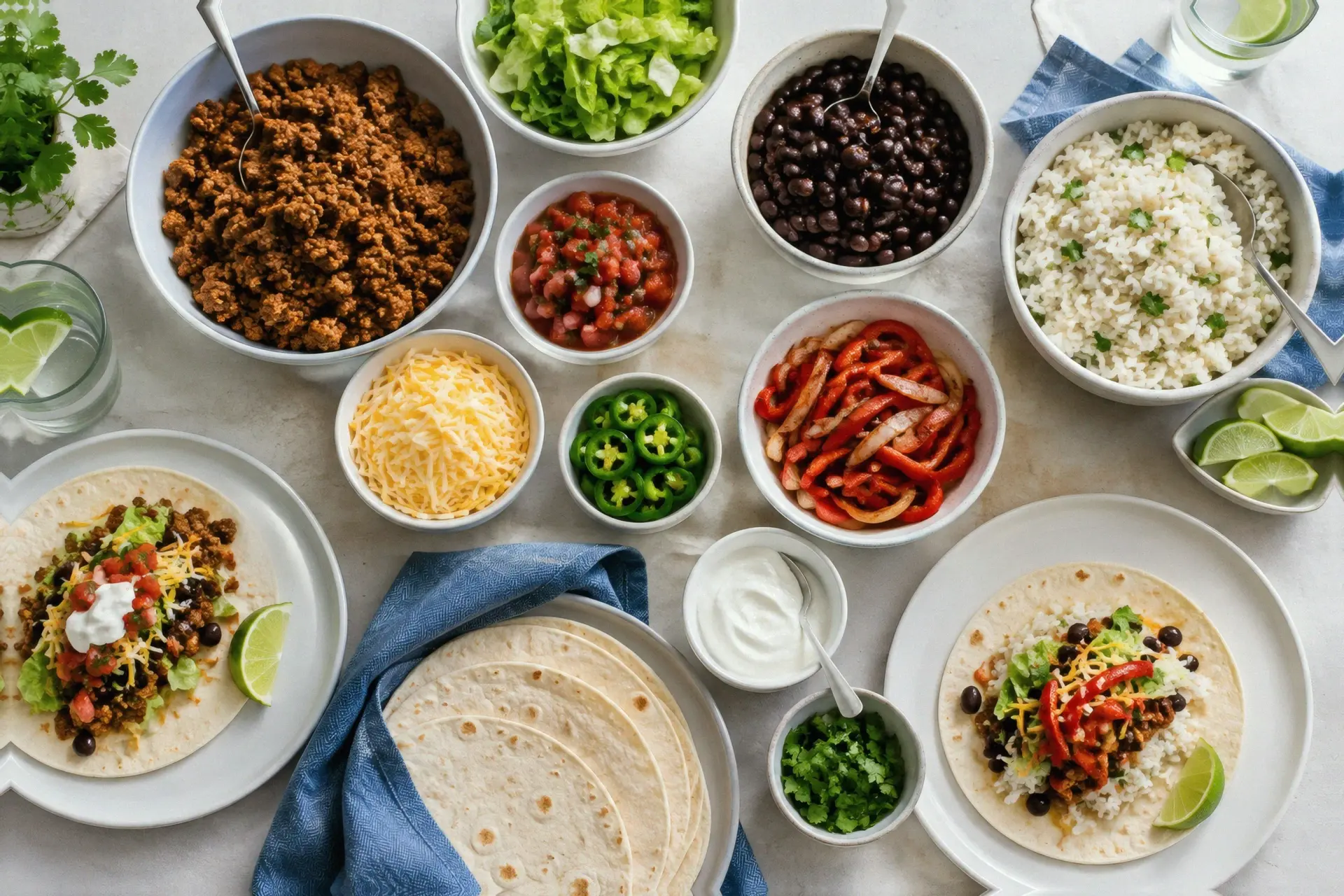
A taco spread can have tortillas and cheese on separate plates, with beans nearby. Someone who wants the ingredients separate can eat from the same meal. Ask about preferences before putting everything together.
Eating alone
Keep portions in mind. A meal that sounds easy can become four nights of the same thing if you cook the whole package.
You can exclude recent dinners when you want variety. But there's no reason to ban yesterday's pasta if you have a portion ready and would happily eat it again.
When the cupboard decides
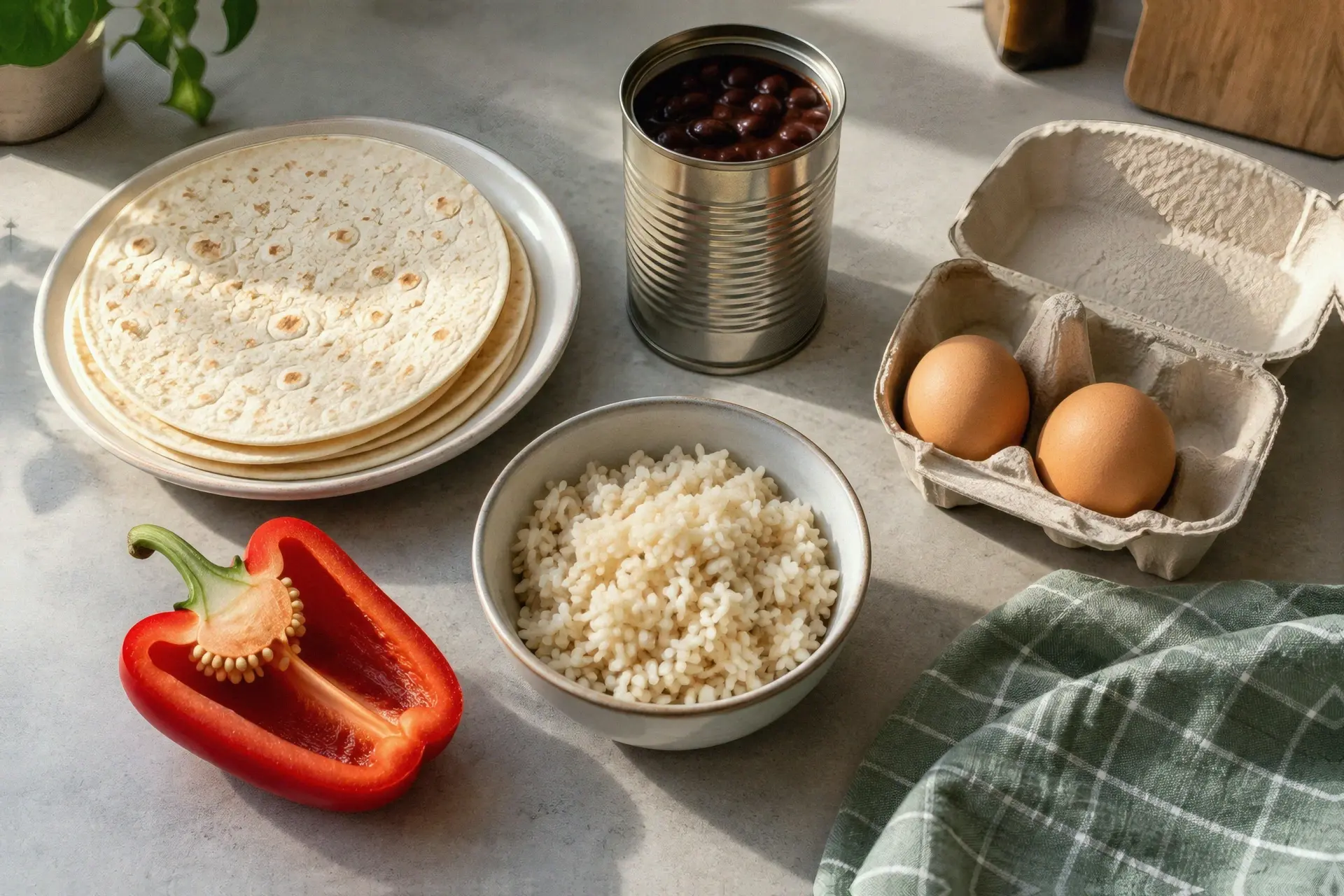
Pick one ingredient you need to use and look for a meal around it. Half a pepper and a few tortillas suggest quesadillas if you also have a filling. A tin of beans gives you other possibilities.
For a playful version, each person nominates a pantry ingredient. Check whether they belong together before committing the whole dinner (jam can sit this round out). Keep leftovers on the list when they're suitable to eat; they don't need a special theme night.
Why another menu may make choosing harder
Every new restaurant means checking the cost again. Then the delivery estimate. And someone still needs to read the vegetarian options.
You may have seen the claim that people make more than 200 food decisions a day. The Max Planck Institute's discussion of that research explains why the estimate is methodologically disputed. It doesn't establish that each choice uses up a fixed amount of willpower. There's no need to diagnose your evening from that number.
When dinner is the immediate problem, use your fallback and eat. The longer meal plan can wait until you have the patience for it.
If the group still disagrees
Someone may need something the shortlist missed. Ask before treating their objection as a broken rule.
For a larger group, a place with individually chosen meals can be easier than agreeing on one shared dish. Check that everyone can afford an order there. A pizza deal is only useful if everyone can eat the pizza.
If the indecision reaches beyond tonight, how to make decisions when you can't decide covers other approaches. The spinner and tournament comparison explains when to choose randomly and when to compare your options directly.
Related Articles
Published · Updated
Paired Comparison Analysis: A Simple Worked Example
Five trip ideas leave ten pairs to compare. Work through each choice, add the scores, and keep ties visible with a blank grid you can reuse.
Published · Updated
Magic 8 Ball Answers (Classic List + Free Online Tool)
Use the Magic 8 Ball as a playful tie-breaker: ask better yes/no questions, learn what the answers mean, and keep the vibe fun and low-stakes.
Published · Updated
Coin Flip Online (Heads or Tails + Best-of-3 Rules)
A coin flip is the simplest decision tool. Use it for tie-breakers, turn order, and low-stakes choices—plus a few house rules that make the result easier to commit to.